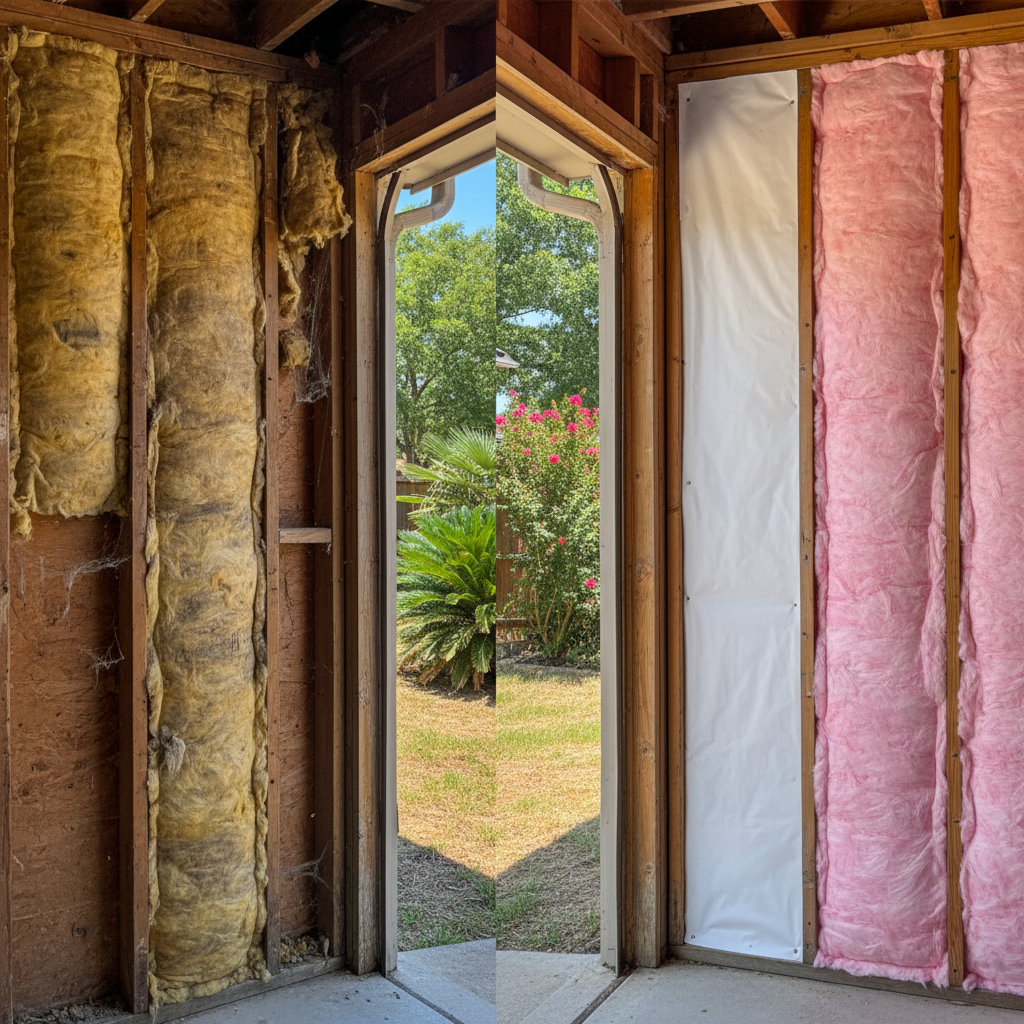
Your garage in Fort Worth probably feels like an oven in the summer and a freezer in the winter, right? I hear it all the time. It's not just uncomfortable; it can drive up your energy bills if that heat or cold is bleeding into your house, and it's rough on anything you store out there. So, you're thinking about insulating it, which is a smart move. But what's the best way to go? Most folks are looking at two main options: traditional batt insulation or spray foam. Let's break down what I've seen working in homes all over Fort Worth, from the older places in the Near Southside to the newer builds out west.
Batt Insulation: The Familiar Option
When I say batt insulation, you're probably picturing those big rolls of pink or yellow fiberglass that look like cotton candy. That's the stuff. It's been around forever, and for good reason: it's generally the cheapest option upfront. You can pick it up at any big box store, and if you're handy, you can even install it yourself.
Here's the deal with batts:
- Cost: It's usually the most budget-friendly way to get some insulation in your garage walls or ceiling.
- Installation: Pretty straightforward for a DIYer, especially if you're just stuffing it between studs.
- Appearance: Once it's covered with drywall, you don't see it, so that's not really an issue. Before that, it's just rolls of fiber.
- Durability: This is where things get tricky in Texas. Batts work by trapping air. If they get wet from a leak, or if humidity gets into them and condenses, they can sag, lose their R-value, and even become a home for mold or pests. Our humidity here in Fort Worth, especially during those long, muggy summers, can be a real problem for batts if they're not installed perfectly with a good vapor barrier.
- Maintenance: Not much maintenance once it's in, but if it gets damaged or wet, you'll likely need to replace sections.
The biggest downside I see with batts in a garage, especially an unconditioned one, is that they don't stop air movement very well. You can have all the R-value in the world, but if air is still leaking in and out around the batts, you're losing a lot of that thermal performance.
Spray Foam Insulation: The Modern Solution
Now, let's talk about spray foam. This is what Fort Worth Spray Foam Insulation specializes in, and for good reason. It's a different beast entirely. We spray a liquid foam that expands and hardens, creating a seamless, airtight barrier. There are two main types: open-cell and closed-cell. For garages, especially if you're looking to really seal it up and maybe even condition it later, closed-cell is often the way to go because it's denser and acts as its own vapor barrier.
Here's what you get with spray foam:
- Cost: It's more expensive upfront than batts, no two ways about it. The material costs more, and it requires specialized equipment and training to install correctly.
- Installation: Definitely not a DIY job. You need pros who know what they're doing to get it right. It expands quickly and needs to be applied evenly.
- Appearance: Like batts, it's usually covered up by drywall. But if it's left exposed (which sometimes happens in attics or crawl spaces, though less common in garages), it has a textured, rigid look.
- Durability: This is where spray foam shines. Once it's cured, it's incredibly durable. It won't sag, settle, or degrade over time like batts can. It forms a monolithic barrier that doesn't allow air or moisture to pass through it easily. This is huge for our crazy Texas weather, especially with the expansive clay soils we have around here that can shift foundations and create little cracks for air to sneak in. Spray foam fills those gaps. It also doesn't provide a food source for pests, which is a nice bonus.
- Maintenance: Practically zero. Once it's in, it's in for the life of the building.
The real magic of spray foam is its ability to create an air seal. It doesn't just insulate; it stops air leakage. That's a game-changer for energy efficiency and comfort in a garage.
My Recommendation for Fort Worth Garages
Look, if your budget is extremely tight and you just want *some* insulation, and you're willing to accept that it might not perform perfectly in our climate, then batts can get the job done for a while. You'll definitely feel some improvement compared to nothing.
But if you want to truly transform your garage, make it comfortable year-round, protect your stored items from extreme temperatures and humidity, and potentially save on your energy bills for decades to come, then spray foam is the clear winner. The upfront cost is higher, yes, but the long-term benefits in terms of performance, durability, and energy savings usually make it a much better investment, especially here in Fort Worth where we battle intense heat and humidity for so much of the year. You're not just insulating; you're sealing your garage off from the elements.
Think about what you use your garage for. Is it just a place to park your car? Or is it a workshop, a home gym, a storage area for sensitive items, or even an extension of your living space? The more you use it, the more sense it makes to invest in the best insulation you can get. Give us a call at Fort Worth Spray Foam Insulation if you want to talk specifics for your place.