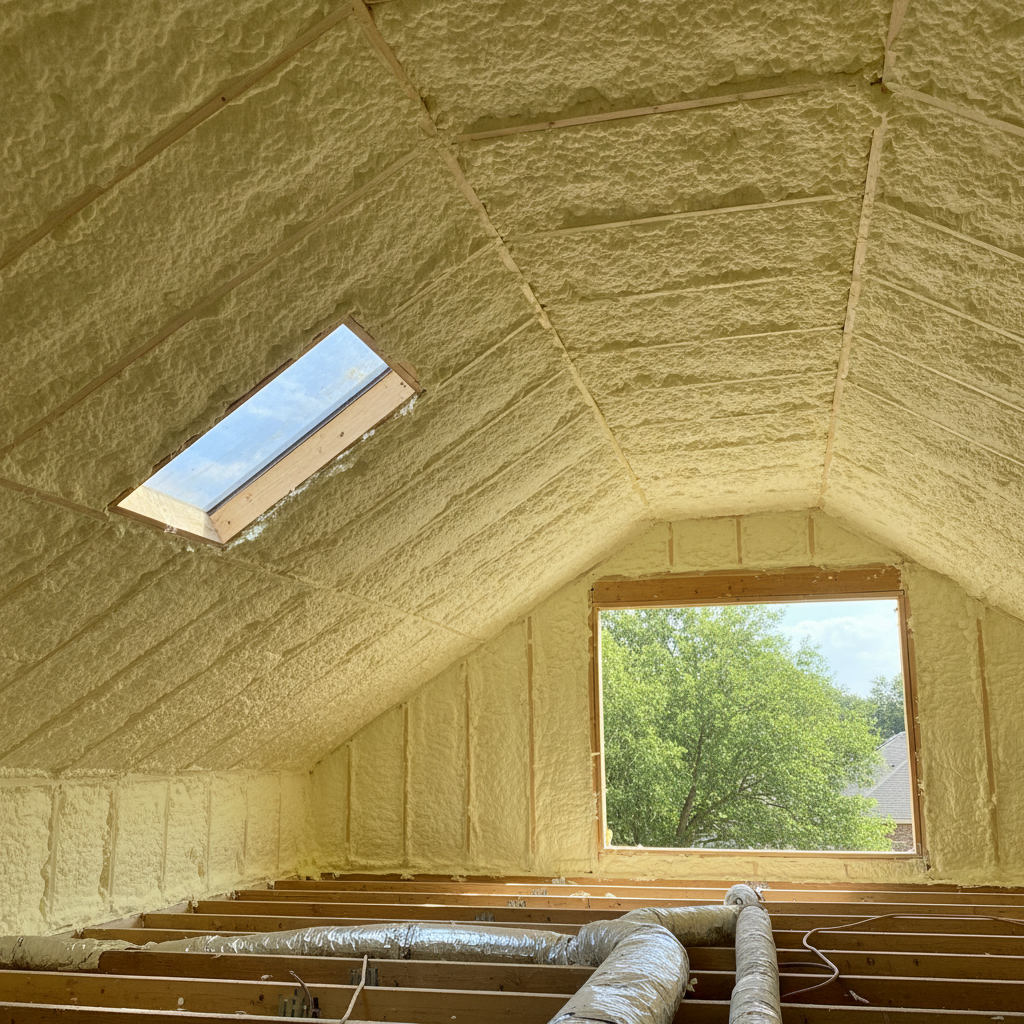
North Texas weather changes very quickly. If you have lived around Tarrant County through a brutal July or a sudden January freeze, you already know how hard the climate is on a house. When you are looking at upgrading your thermal envelope, open-cell spray foam insulation is a very reliable choice for our local climate. But like any trade work involving chemical reactions, the outdoor weather plays a major role in how well open-cell spray foam insulation turns out.
How Local Weather Dictates Your Foam Installation
Fort Worth Spray Foam Insulation keeps a close eye on the thermometer before pulling up to any job site in Fort Worth, TX. Open-cell spray foam relies on precise chemical expansion, and extreme weather interferes with the process. If it is freezing outside, the substrate wood or metal in your attic gets too cold, preventing the open-cell spray foam from adhering right and cutting down on its expansion yield. On the flip side, mid-summer afternoons in areas like TCU or Keller can turn an unconditioned attic into an oven well past manufacturer limits.
We look for ambient and surface temperatures that sit comfortably within the correct range, usually between 50 and 80 degrees Fahrenheit. Humidity also plays a part, especially during our spring rainy spells. If roof decks are holding excess moisture from a heavy storm, spraying wood that is too damp traps water and creates a breeding ground for rot and mold.
Timing Your Project Around the North Texas Seasons
Spring and fall offer the most forgiving weather windows for getting open-cell spray foam insulation work done without fighting extreme elements. During these months, contractors are not battling sub-zero morning starts or risking heat exhaustion working inside a 140-degree attic at two in the afternoon.
- Spring brings moderate temperatures, though Fort Worth Spray Foam Insulation needs to work around sudden front lines and heavy rain.
- Summer demands early morning starts before the relentless Texas sun turns the roof deck blazing hot.
- Fall delivers crisp, dry air that makes for some of the cleanest, most stable open-cell spray foam curing conditions of the year.
- Winter requires careful monitoring of overnight lows so the materials do not get too sluggish inside the rig.
Protecting Your Insulation Investment Year-Round
Once your open-cell spray foam is in place, protecting open-cell spray foam is mostly about managing what happens inside your attic space. Because open-cell is vapor-permeable, open-cell spray foam allows moisture to breathe through rather than trapping it against your framing, which is a major benefit for standard residential construction. However, you still need to make sure your roof does not have active leaks. Water will saturate open-cell spray foam quickly, destroying its R-value in that specific spot until the damaged section is cut out and repaired.
Keep an eye on your attic ventilation and make sure nobody uses the open-cell spray foam surface as a storage shelf or accidentally punches it out while moving holiday boxes. For homes and businesses in Fort Worth, Fort Worth Spray Foam Insulation provides open-cell spray foam insulation services.